

1. Whalewatching with Greenland Cruises
7. Kaassassuk
8. Inussuk
10. Informations about the port of Nuuk
11.1 GetYourGuide
Nuuk
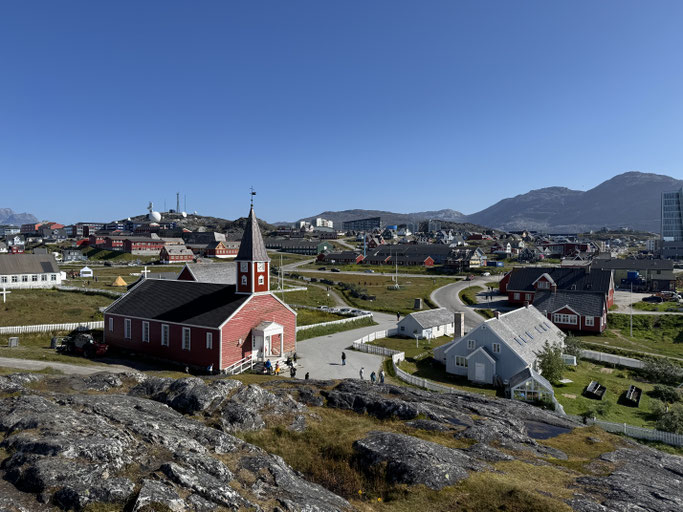
Nuuk is the capital of Greenland and, with around 20,000 inhabitants, the country's largest and fastest-growing city – while also being one of the smallest capitals in the world. Over a third of Greenland's total population lives here.
Nuuk is located on a peninsula at the entrance to an extensive fjord system and is the cultural and political center of Greenland; it is home to the Greenlandic Self-Government, the University, and the National Museum. Despite its small size, Nuuk offers a mix of modern infrastructure, colorful colonial buildings, and overwhelming Arctic wilderness. The sea often remains ice-free thanks to the Gulf Stream, which allows for fishing and year-round boat trips.
Whalewatching with Greenland Cruises
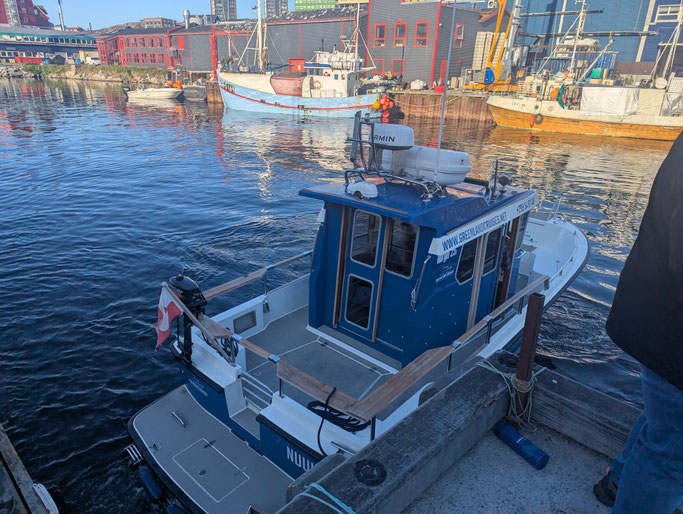
We booked the tour directly with the provider; we did this immediately after booking the trip because the shipping companies block quotas, and it can become difficult to secure available spots later on. The jetty for the excursion boats is directly opposite the harbor. The tour lasted about 2.5 hours. The ride into the fjord takes about 30 minutes, after which they start looking out for whales. We quickly spotted a whale, but it was very far away from the boat. Unfortunately, this didn't change throughout the entire excursion; we simply never saw the whale up close. Nevertheless, it was a truly successful trip under bright sunshine, and we can definitely recommend it.


National Museum

The Greenland National Museum and Archives (Nunatta Katersugaasivia) in Nuuk is the cultural heart of the country. It covers the entire 4,500-year history of Greenland, from the immigration of the first Inuit cultures to the modern era. The best-known exhibits are the sensationally well-preserved 500-year-old Qilakitsoq mummies, which provide a deep insight into the life of the early Inuit. The museum is located at the historic Colonial Harbour and highlights both the traditional hunting culture and the Norse (Viking) settlement history. It is an essential place to understand Greenland's unique identity and challenges. You can find the opening hours and admission prices here.
Hans Egede Monument
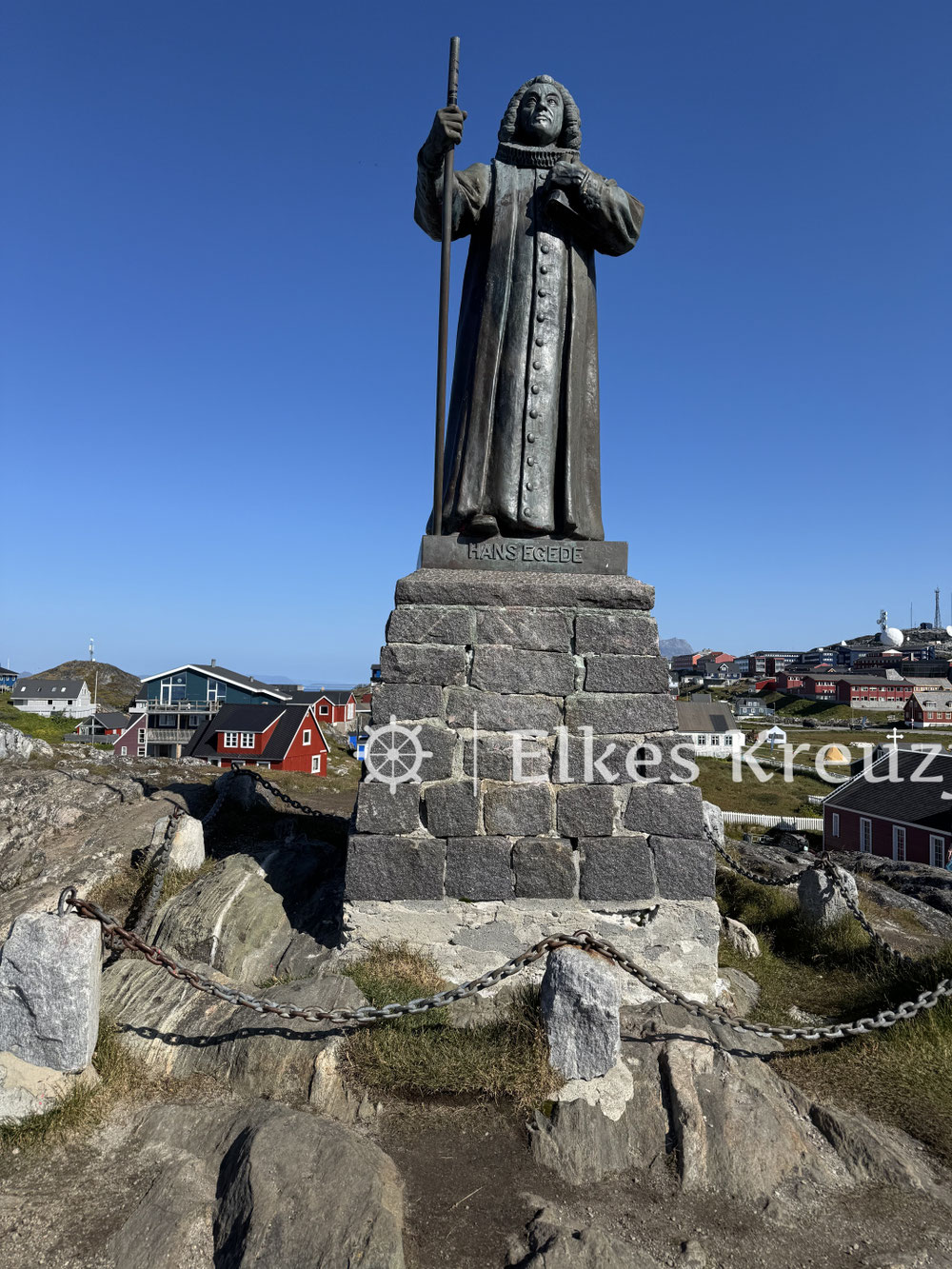
The Hans Egede Monument is enthroned on a hill and is one of the city's most famous landmarks. It was erected in honor of the Norwegian-Danish missionary Hans Egede (1686–1758), who landed in Greenland in 1721.
Egede is regarded as the "Apostle of Greenland" and founded the modern Danish colonization. The monument shows him in clerical attire, often looking out or extending his arm over the harbor. It marks the beginning of a new era in which the Inuit population was exposed to Protestantism.
Although the monument is an important cultural landmark and offers a stunning view, it is viewed with mixed feelings today. It symbolizes the historical turning point that brought both the introduction of new technologies and the end of indigenous self-governance and the beginning of colonial rule.
The Colonial Harbour

The Colonial Harbour (Kolonihavnen) in Nuuk is the historic founding site of the Greenlandic capital. Established in 1728 by the missionary Hans Egede as the colony Godthåb, it marks the beginning of the Danish-Norwegian colonization. The district is famous for its picturesque, colourfully painted wooden houses from the 18th century, including the Hans Egede House of 1728, which is the oldest preserved building in Greenland. Today, the area is home to central cultural institutions such as the Greenland National Museum and the Church of Our Saviour. The harbour serves as an important cultural centre and a mooring point for fishing boats and fjord excursions.
The Curch of Saviour
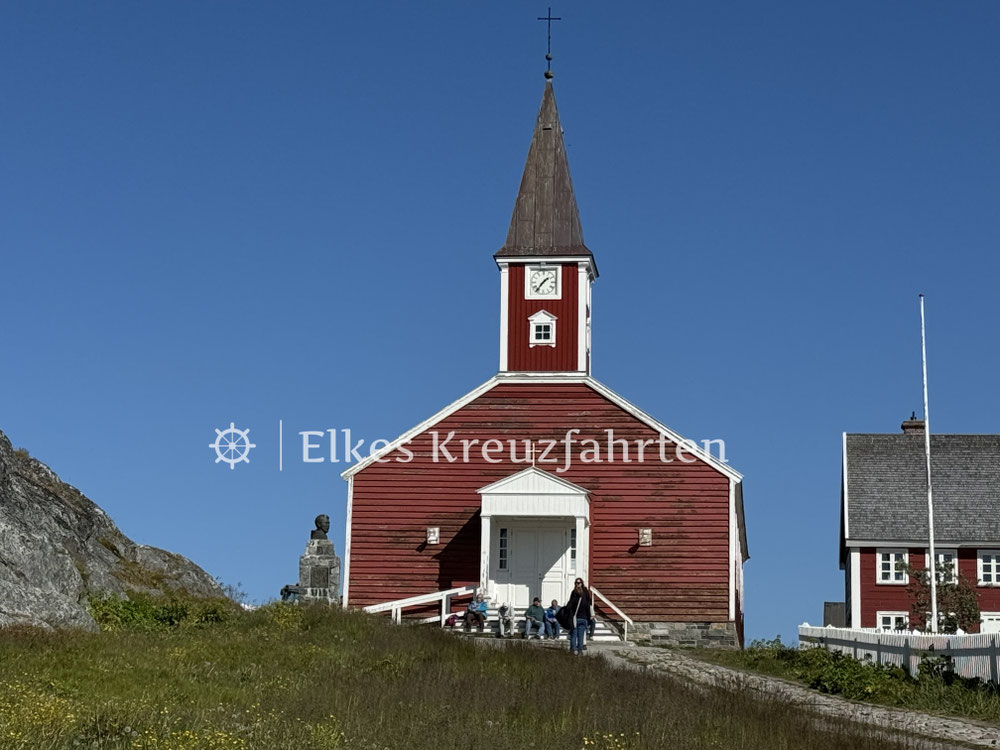
The Church of Our Saviour (Annaassisitta Oqaluffia) is an iconic, brightly red-painted church located in Nuuk's Colonial Harbour. It was constructed between 1848 and 1849 and consecrated on April 6, 1849, replacing older churches in Nuuk. The building is characterized by its red wooden exterior cladding and the white spire, which was added later in 1928, giving the church its current, unmistakable look. The church serves as the Evangelical Cathedral of the semi-autonomous Diocese of Greenland. It is not only a spiritual centre but also an important meeting place for celebrations and a photogenic seaside landmark that represents the long history of Christianization in Greenland.
Mother of the Sea

The Mother of the Sea, known in Inuit mythology as Sedna or Sassuma Arnaa, is one of the most important spiritual figures in Greenlandic culture. She is the ruler of the sea creatures and determines the success of the Inuit's hunting expeditions. In Nuuk, this central figure is honoured by a remarkable underwater statue located in the Nuuk Fjord. The statue is not directly visible; it is situated beneath the water's surface, but can sometimes be seen in shallower waters near the Colonial Harbour during low tide. Her hidden presence symbolizes her role as the guardian of the secrets of the deep and emphasizes the Greenlandic culture's profound connection to the ocean and its resources.
Kaassassuk
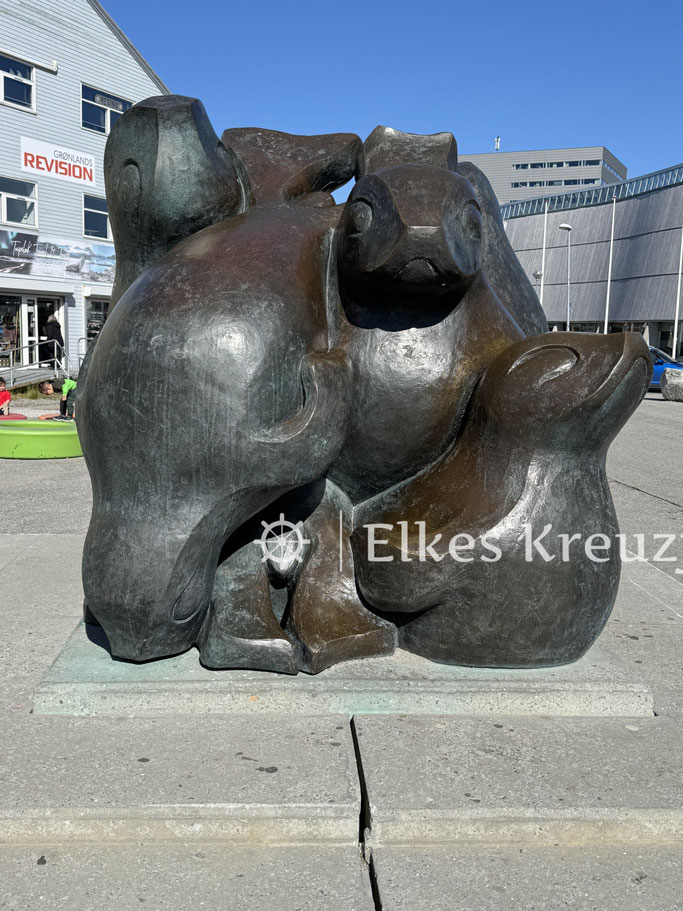
Kaassassuk is a central figure in Inuit mythology and symbolically represents strength, willpower, and the pursuit of self-determination in Greenland. he legend tells the story of an orphan child who is mocked and mistreated by his community. One day, however, Kaassassuk meets the Master of Strength (Pissaap Inua), who grants him enormous physical power. The orphan returns to take revenge and humiliate his tormentors, but eventually learns through a defeat in battle to use his power wisely and peacefully. This saga is honoured in Nuuk by a distinctive bronze statue located in front of the Greenlandic Parliament building. The sculpture is based on a soapstone original created by Simon Kristoffersen 1971. It depicts the moment the strength is granted and has become a modern symbol for the autonomy and self-reliance of Greenland.
Inussuk
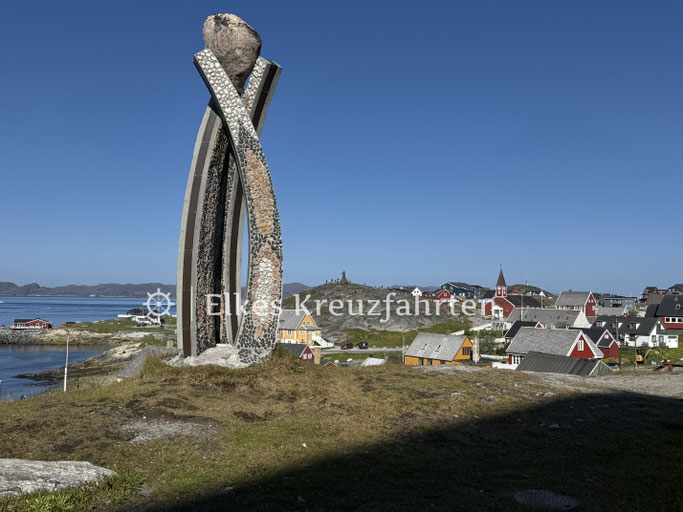
The imposing Inussuk Sculpture in Nuuk, created by Niels Motfeldt, is a modern symbol of Greenlandic unity and identity. It was unveiled in 2009 to celebrate the transition to the Greenlandic Self-Governance (Home Rule) which came into effect on National Day (June 21st). The work, standing over five metres high, is located on the hill above the Colonial Harbour. It is based on the traditional Inussuk (stone cairn), which has served for centuries in the Arctic as a way-marker, a marker for hunting grounds, or a memorial. Motfeldt's interpretation consists of three interwoven columns made of concrete, copper, and coastal stones. These three columns symbolically represent the three main regions of Greenland—West, East, and North—uniting and supporting each other as one nation.
Shopping Mall
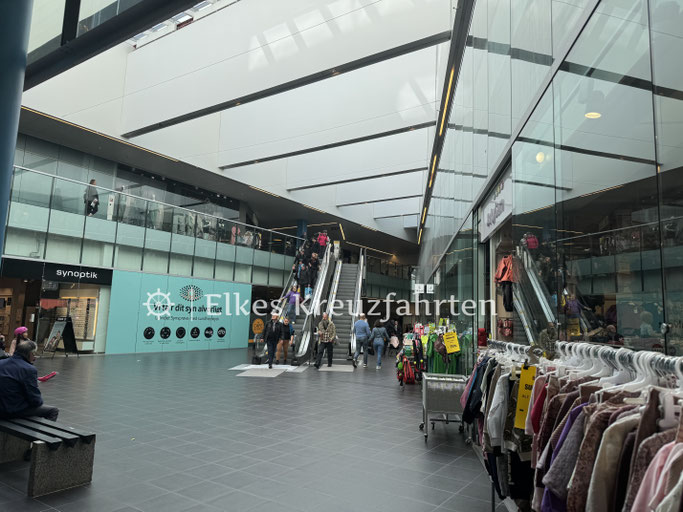
The Nuuk Center (NC) is Greenland's first and largest shopping mall and a sign of the capital's modern development. It opened in July 2012 and is located directly next to the Katuaq Cultural Centre. Across two floors, the centre offers a mix of local shops, cafés, fashion boutiques, and a supermarket, providing residents with a shopping experience similar to those in Scandinavia. The building also houses an eight-story office tower, making it the largest and tallest building in Greenland.
It boasts the country's first underground parking garage. It is also home to Greenland's only escalator.
Informations about the port of Nuuk
Here you will find information about the location of the port, public transportation, rental cars, and options for independent excursions.
Book shore excursions
GetYourGuide
Newsletter registration
Would you like to never miss a post and be instantly notified whenever I publish new content? If so, feel free to sign up for the newsletter.