

2.1 Fotografi
2.2 The best Hot Dog in Reykjavik
2.3 Sun Voyager
3.1 Perlan
3.2 Strokkur
3.3 Gulfoss
3.4 þingvellir
5. Informations about the port of Reykjavik
6.2 Get Your Guide
Reykjavik
The capital of Iceland, with its 130,000 inhabitants, is a popular destination for cruises to the North. Well-known sights include the Hallgrímskirkja church, the Harpa Concert Hall, and the Perlan hot water storage facility with its restaurant under the glass dome. But there are also many natural wonders in the area surrounding Reykjavik, foremost among them the Blue Lagoon and, of course, the Strokkur Geyser and the Gullfoss Waterfall. Ships usually stay in the port of Reykjavik for two days, allowing cruisers sufficient time to experience all the sights.
Blue Lagoon
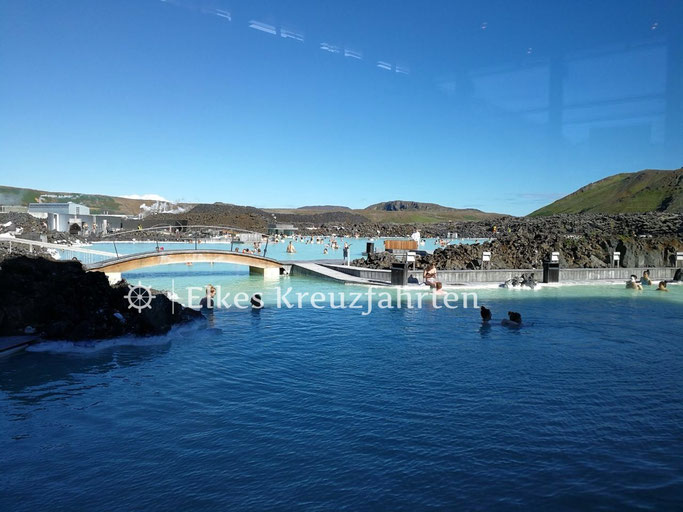
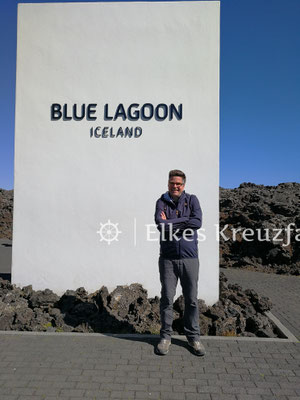
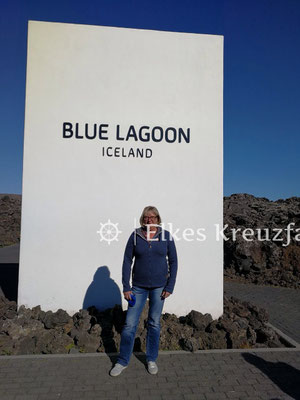
On the first day, we had booked an excursion to the Blue Lagoon. We were picked up at the harbor and drove about 45 minutes to the Blue Lagoon. During the drive, our local guide provided the first information about Iceland and Reykjavik. The Blue Lagoon is the creation of the nearby Svartsengi geothermal power plant and was formed when the power plant began to bring hot water with 240 Degrees from about 2000 meters deep to the surface to generate energy. The pure water was then discharged, and the Blue Lagoon was formed. The water in the lagoon consists of two-thirds flushed-in seawater and one-third infiltrated freshwater. The diatoms dissolved in the seawater reflect blue light and make the Lagoon shine in its typical color. The silica contained in the water helps with various skin diseases, which is why a medical clinic is also located nearby.
Upon arrival at the Blue Lagoon, we first had to wait, as guests are admitted in time slots because the demand is very high.
First, it was time to shower, which is mandatory and is also checked. Then the time had come; we could immerse ourselves in the 38 Degrees warm water of the Blue Lagoon. We had about one and a half hours to explore the thermal bath, which is sufficient. A visit to the Blue Lagoon is definitely a must-do when visiting Iceland and Reykjavik, but I wouldn't need to do it a second time. It was simply too crowded and too expensive for me.

If you're looking for something sporty in Reykjavik, Baja Bikes is a good choice. Here you can both rent bicycles and book guided city tours with local, usually German-speaking guides.
Walk through Reykjavik

After visiting the Blue Lagoon, we still strolled through the city. Reykjavik is not only the capital of Iceland but also the northernmost capital in the world. Around 130,000 people live in Reykjavik, meaning approximately 37% of Iceland's population resides here. Despite this, the city is very quaint (or charming/sleepy) and easy to explore on foot. Unfortunately, we didn't have enough time to see everything, but there is always a second chance.
Fotografi

A great little shop where a photographer displays and sells his work. We bought a wonderful photo as a souvenir of Iceland and Reykjavik. There are countless truly wonderful motifs, which made the selection really difficult for us. A truly original shop among all the souvenir shops with mass-produced goods.
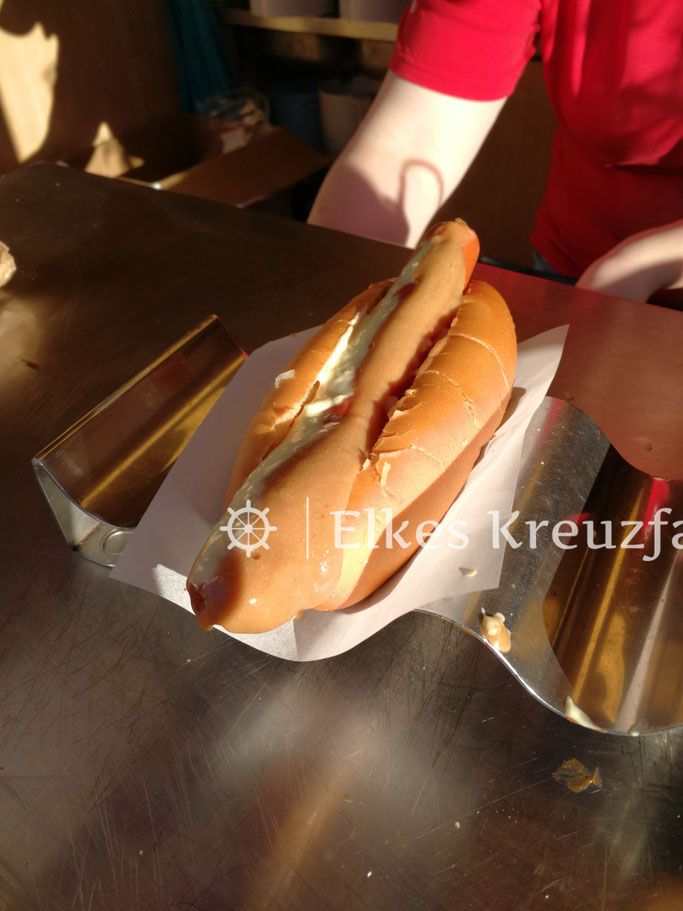
Bæjarins Beztu Pylsur

The best hot dogs in the city are supposedly at Skúli's. We naturally had to test this, as swimming is known to make you hungry.
Even Bill Clinton and Kim Kardashian didn't miss the chance to eat a hot dog here during a visit to Reykjavik.
The stand is located at the old harbor and is so inconspicuous that we walked right past it the first time.
The hot dogs are really good; a visit is worthwhile.
In the meantime, the hot dog stand is mentioned in every travel guide.
Sun Voyager

To get a little more exercise after eating, we walked back to the harbor. The path goes along the sea, and halfway there, you come across a beautiful bronze figure that was erected by Jón Gunnar Árnason in 1986. It was unveiled for Reykjavik's 200th anniversary.
The sculpture represents a Viking boat (though the artist called it a "dreamboat") and is now one of the city's most visited landmarks.
Golden Circle
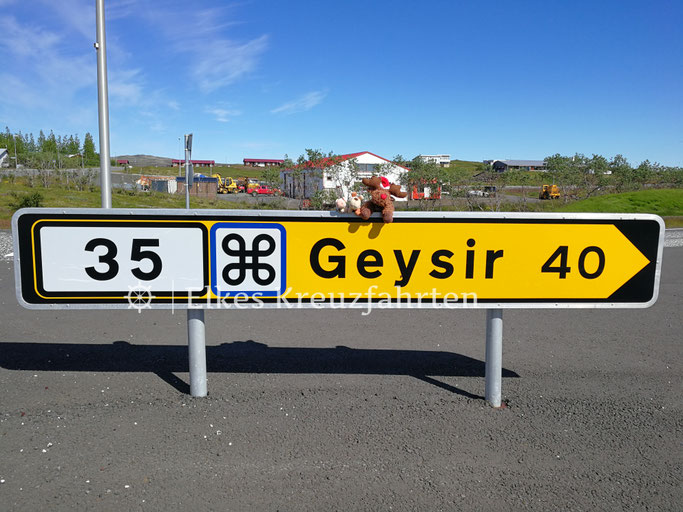
On the second day, we took the Golden Circle excursion. Whenever it comes to excursions in Iceland, it probably comes up. It consists of three of perhaps the most breathtaking places in Southwest Iceland. These are the Þingvellir National Park, the Geysir Geothermal Area with the most famous geyser Strokkur, and the spectacular Gullfoss waterfall. The Blue Lagoon is often included as well, but we had already visited that yesterday, as the tour that would have included it was immediately booked out.
We started early in the morning; the excursion lasted 8 hours.
Perlan
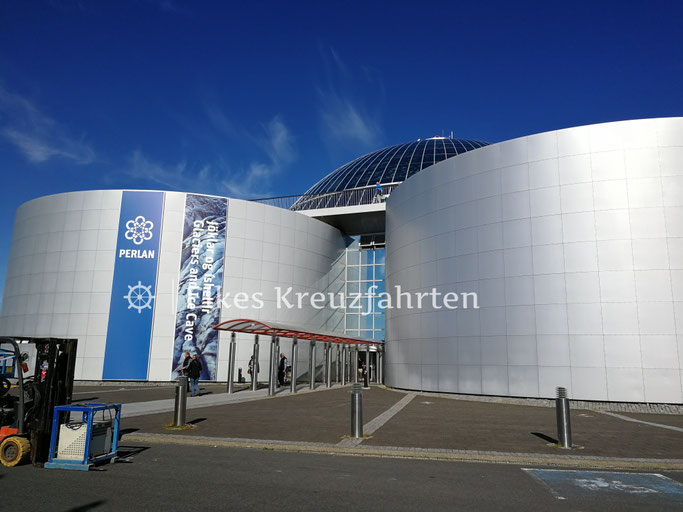
The hot water storage facility Perlan, designed by Ingimundur Sveinsson, was opened in 1991. It supplies the city with hot water and also powers the heated streets and sidewalks in winter. The six existing tanks were covered with a glass dome, and lamps create the impression of a starry sky. One of the tanks was drained, and a viewing platform is located on the roof, offering a fantastic view of Reykjavik.
One of the large tanks houses the Perlan Museum, which we couldn't visit due to lack of time, with the exhibition Wonders of Iceland. A guided tour takes visitors through the history of the glaciers. The museum has succeeded in recreating an ice tunnel similar to one that can naturally occur in a glacier. Since it is - 10 Degrees cold in the tank, you should bring a warm jacket. You can book the tour here.
Strokkur
On our way to the Strokkur, our excursion had almost been over, even though it had just begun. Our bus broke down, and it was uncertain whether we would get a replacement. After almost an hour, to our relief, the replacement bus arrived, and we could continue. We simply shortened our lunch break and were back on schedule.
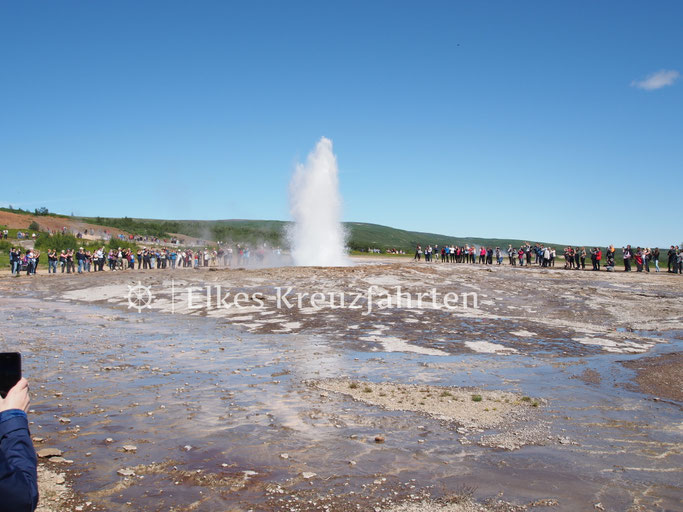
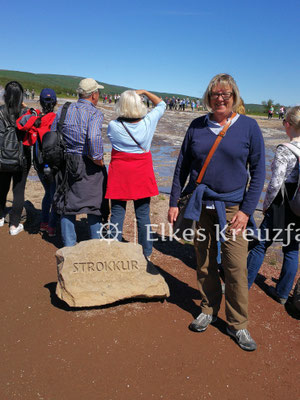
The path to the Strokkur leads through a landscape where steam is rising everywhere, hot streams with yellowish deposits flow, and the smell of sulfur hangs over everything. Since the Strokkur was still peaceful, we first took a calm look around.

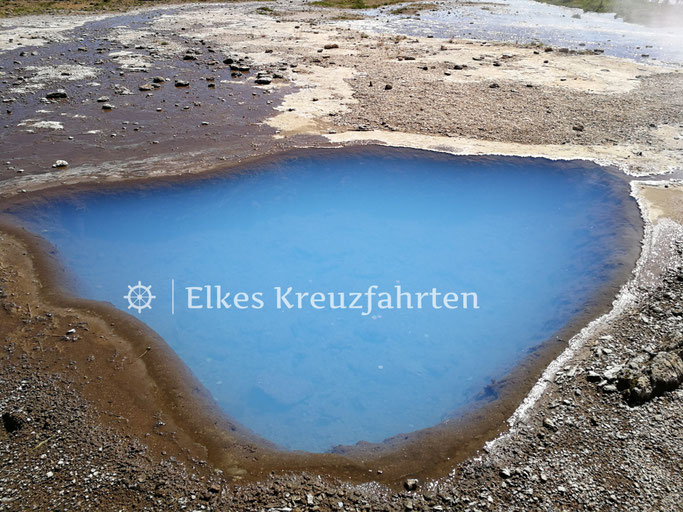
Almost unnoticed, the original lies next to the Strokkur—the Great Geysir, the namesake for all geysers after it. It gave up its activity 100 years ago and has since become a still lake with bright blue water.
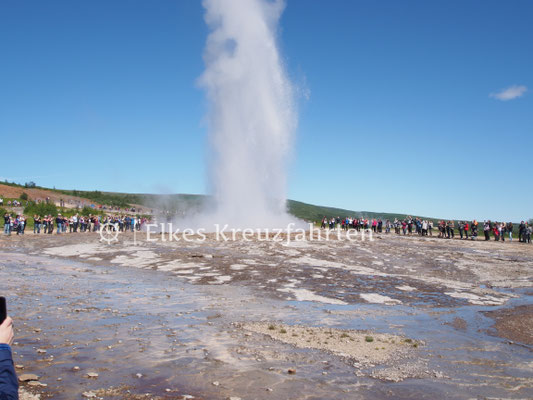
But then, let's turn our attention to the Strokkur. The water bubbles away in the hole; the Strokkur erupts on average every 10 minutes. Suddenly, a water bubble forms, and then the eruption comes. The Strokkur shoots a water column about 100 feet high into the air, which then quickly collapses, a spectacle that left me speechless.

The Gulfoss
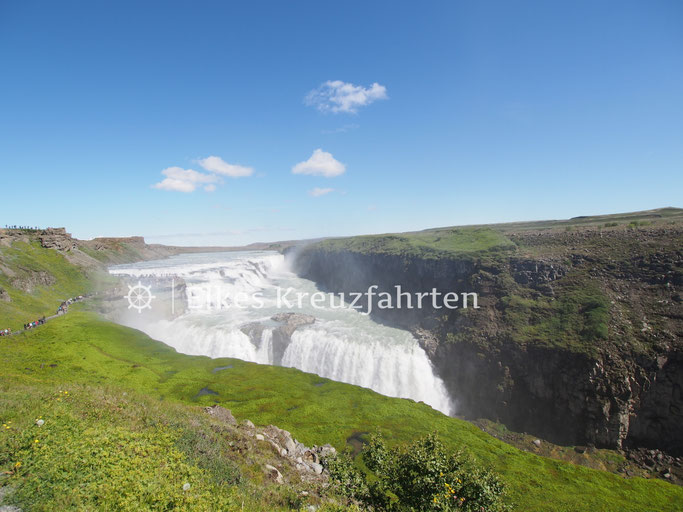
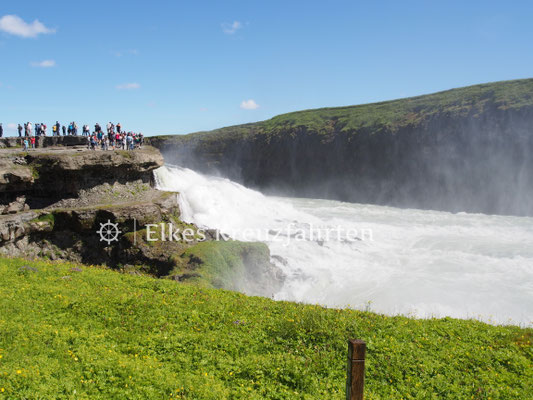
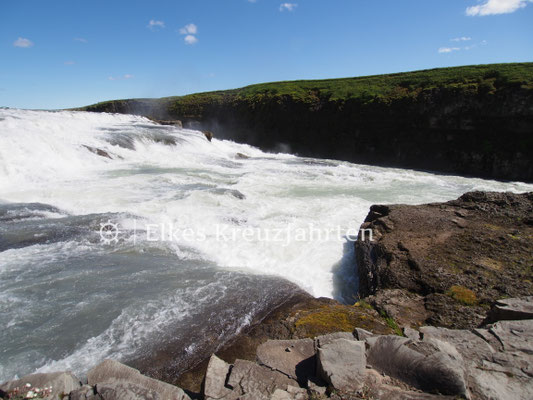
The water of the glacial river Hvítá plunges here in two impressive cascades into a deep, narrow canyon. The first drop is 11 meters and the second is 21 meters high, resulting in a total height of 32 meters. On average, about 109 cubic meters of water per second cascade over the edges. The pure force of nature is palpable here.
The name is derived from the golden shimmer that the fine spray (mist) creates in the sun—a beautiful rainbow often appears, crowning the natural spectacle.
The waterfall is not only a natural spectacle but also a symbol of Iceland's conservation efforts: it was almost used for a hydroelectric power plant at the beginning of the 20th century. It is only thanks to the brave determination of the farmer's daughter, Sigríður Tómasdóttir, who threatened to throw herself into the rapids, that the Gullfoss is now protected and can be admired in its original splendor.
þingvellir National Park
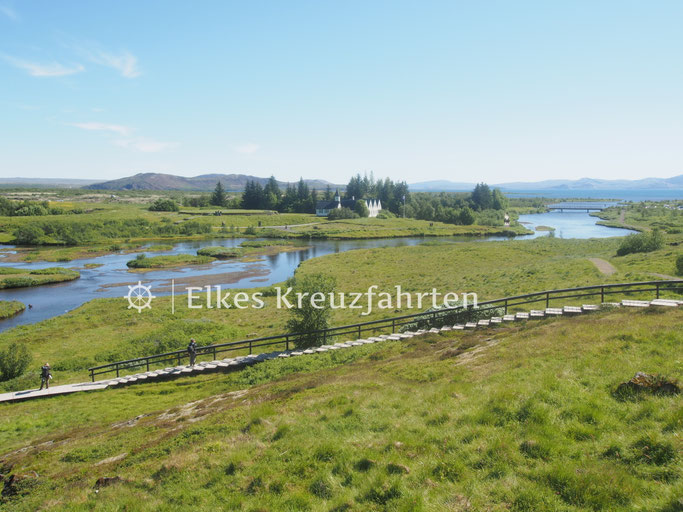
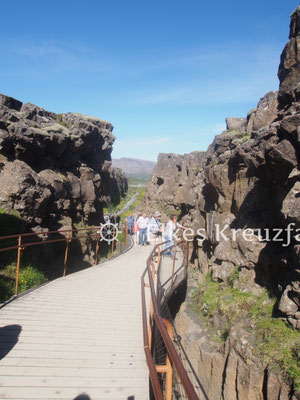
In Þingvellir National Park, geology and millennia-old history converge. The park is located in the rift valley zone between the North American and Eurasian tectonic plates. Iceland is the only country where this rift runs above sea level, and nowhere is it better to see than here. When the tectonic plates drifted apart, magma rose, leading to the creation of Iceland millions of years ago. Regular earthquakes increase the distance between the plates every year by 1 inch. But Þingvellir is also a historically significant place. Zhe democratic parliament was founded here at 930 AD, making it one of the first in the world. 1000 AD Christianity was peacefully introduced here through a unique compromise: Christianity became the official religion, but pagans were allowed to continue worshipping their gods in private.


After this eventful day with its such diverse impressions, it was time to return to the ship and leave Reykjavik. We had two wonderful days in the capital and will definitely come back. I have rarely left a city with such melancholy.
Informations about the port of Reykjavik
Book shore excursions
Meine Landausflüge
My shore excursions offer you fantastic cruise trips at the most popular ports worldwide. Typically, they are available in much smaller groups and at more affordable prices than the cruise line’s own excursions. All our options are carefully selected to guarantee you an unforgettable outing experience.
- Small group sizes
- Punctual return guarantee
- Convenient pick-up and drop-off service from/to the port
- Money-back guarantee for itinerary changes and port cancellations
- Free cancellation up to 24 hours before the tour (Flex option up to 60 minutes before the tour start)
GetYourGuide
With GetYourGuide, you can book land excursions in small groups, often at better prices than those offered by cruise lines. All experiences are carefully selected and reviewed by experts. Free cancellation is available up to 24 hours before the start of the excursion.
Newsletter registration
Would you like to never miss a post and be instantly notified whenever I publish new content? If so, feel free to sign up for the newsletter.